New Outdoor Graphic Tees + How to Choose a Hiking T-Shirt
A good graphic tee does a lot of work. It’s the shirt you hike in at sunrise, wear to the brewery at sunset, and somehow still end up wearing the next morning. We just released a new batch of Trail Ready graphic tees, and since we’re on the subject, we figured we’d also share what we’ve learned about picking a t-shirt that holds up outdoors, whatever brand is on the tag.
First, the new designs. Then the buying guide.
Meet the new Trail Ready graphic tees
Every shirt in this drop uses the same lightweight, breathable fabric with UPF 40+ sun protection, and each one carries a design inspired by life in the Eastern Sierra, where we’re based.
The Mountains & Beer graphic is our best-selling design, now on our newest fabric. It’s made for mountain days and the beer that inevitably follows. We have a Navy or Charcoal in the men’s tee, or the women’s V-neck in Alpine.
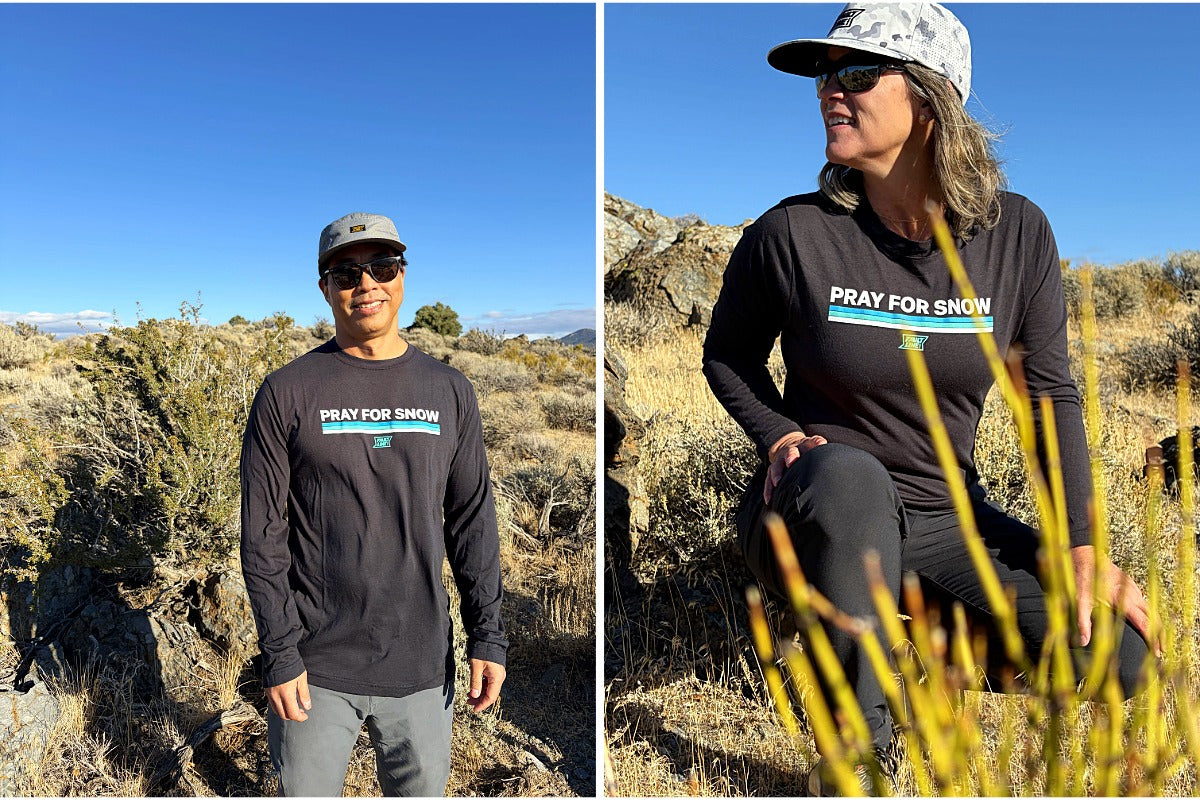
Some of our other new designs include the Mammoth Tee in Heather Gray, Never Fly South tee in Olive, Mountain Wear T-Shirt, and the Pray For Snow graphic is available in a long sleeve. For women, in addition to the Mountains & Beer V-neck and few other t-shirts that have been in the line for a while, we have the Mammoth Tee in Melon and the Pray For Snow design, also in long sleeve.


How to choose a t-shirt for hiking, skiing, and camping
Whether you buy from us or someone else, these are the things worth checking before you commit to a shirt you’ll sweat in.
Start with the fabric
- Cotton is soft and comfortable, but it absorbs moisture and dries slowly. That’s fine for short walks, car camping, and around town. It’s a poor choice when you’ll be working hard in cold or wet weather, because a damp cotton shirt can get clammy and chilly.
- Polyester and other synthetics move sweat off your skin and dry quickly, and they’re durable. The tradeoff is that some hold onto odor more than natural fibers.
- Merino wool resists odor very well and regulates temperature across a wide range of conditions. It usually costs more, and thin merino can wear out faster with repeated use.
- Blends try to get the best of each. A poly/cotton/rayon tri-blend, like the one in our new tees, keeps much of the softness of cotton while drying faster than a 100% cotton shirt.
Check the weight
Fabric weight is usually listed in grams per square meter (gsm). Many everyday cotton tees run 180 gsm or more, while lighter technical tees come in lower. For warm-weather hiking and travel, a lighter shirt breathes better and packs smaller. For cooler days, choose a heavier fabric or plan to layer. Our new tees are 135 gsm (4 oz.), which puts them on the lightweight end.
Look for a UPF rating
Fabric with a UPF rating has been tested for how much ultraviolet radiation it blocks. UPF 40+ blocks about 97% of UV rays, which matters on exposed ridgelines, lakes, and snow, where sunlight reflects back at you. It only protects the skin the shirt covers, so keep using sunscreen on your face, neck, arms, and anywhere else that’s exposed.
Get the fit right for what you’re doing
- Layering: a base-layer shirt should sit close to the body without restricting you.
- Hiking with a pack: make sure the length covers your lower back and that nothing rubs under the shoulder straps or hip belt.
- Climbing or scrambling: raise your arms overhead in the fitting room. If the hem rides up past your waist, try another size.
- Sizing: brands vary, so read the fit notes on the product page and size accordingly.
Inspect the small details
Flat seams and a tagless or printed neck label help prevent chafing during long days. If a shirt has a large graphic, check that the print feels soft and flexible and sits flat against the fabric, since a stiff print can get uncomfortable under a backpack. Lighter colors reflect more heat on hot days, while darker colors hide sweat and dirt on multi-day trips.
Take care of it
A few habits make outdoor shirts last much longer:
- Wash cold and turn graphic tees inside out to protect the print.
- Skip fabric softener, which can coat fibers and reduce how well a shirt wicks moisture.
- Wash sweaty shirts soon after a trip instead of leaving them in a pack, since odor sets in over time.
- Hang dry or use low heat to keep prints and stretch in good shape.
The short checklist
Before you buy any outdoor tee, ask yourself: Does the fabric match the weather and effort? Is it light enough to breathe? Does it have a UPF rating? Does it fit with a pack on? Will the print and seams stay comfortable after hour six? If the answer to all five is yes, you have a good shirt.
If you want to see the new designs in person, browse our full tri-blend t-shirt collection. See you on the trail.